


The Museum of Sticks and Stones isn't a building you can walk into. It's a non-profit that uses art, play, history, and education to help people understand hate, where it comes from, how it spreads, and what it takes to build something better. The existing site was unreliable, difficult to update and no longer reflected where the organisation was going.
At the same time, the non-profit was bringing several projects and identities together under the Museum of Sticks & Stones name. It needed one digital home that could make that change clear, serve the public, funders and partners, and feel as active and ambitious as the work itself.
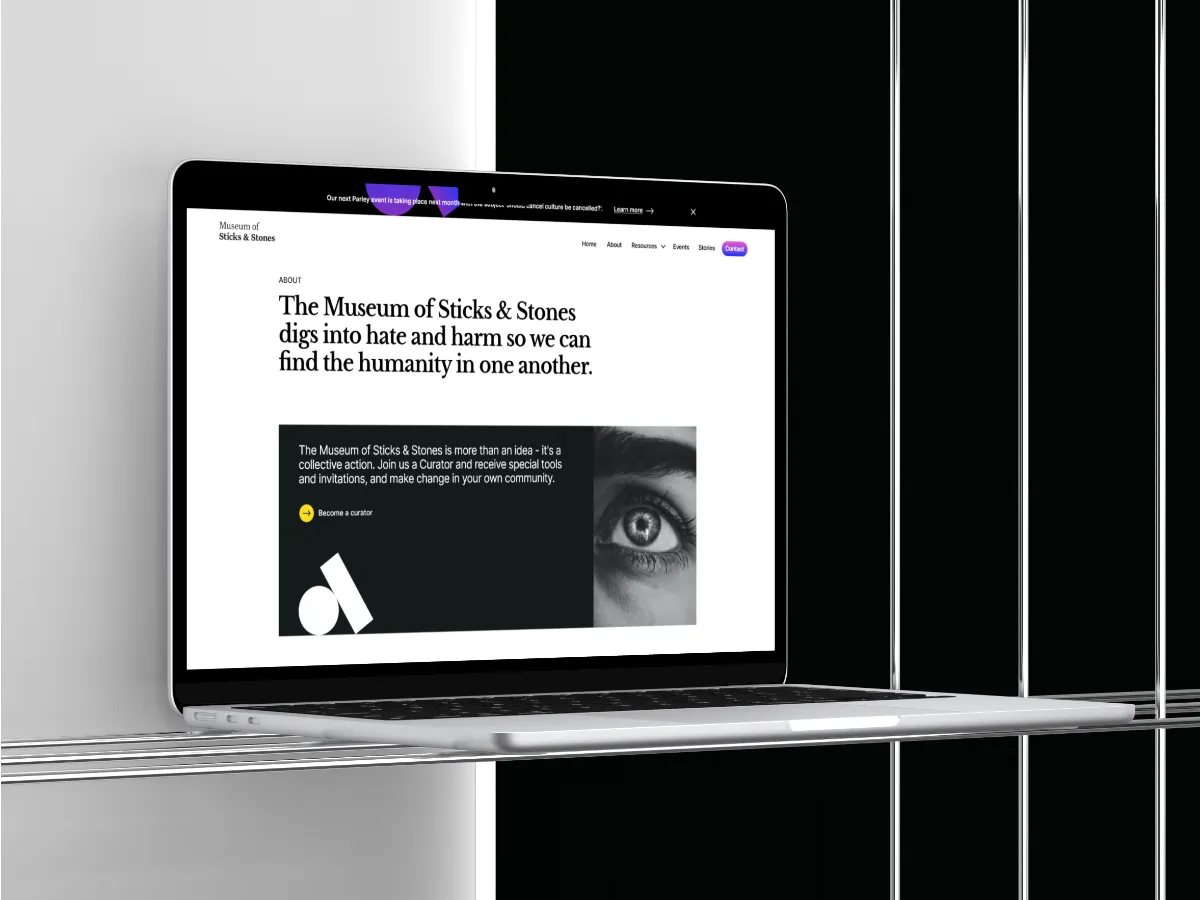
The Museum of Sticks & Stones had existed in different forms before we became involved, and the team had decided to simplify this. The new website needed to become the museum's primary digital home: bringing its work together, making it easier to maintain and giving public audiences, funders and partners a clearer way into the organisation.
A physical museum uses space, sequence, scale and interaction to help people encounter a subject. The website needed to carry that responsibility. The challenge was to create a digital environment that felt like an active museum: somewhere people could explore ideas, encounter human stories and understand how the organisation's different projects formed part of one mission.
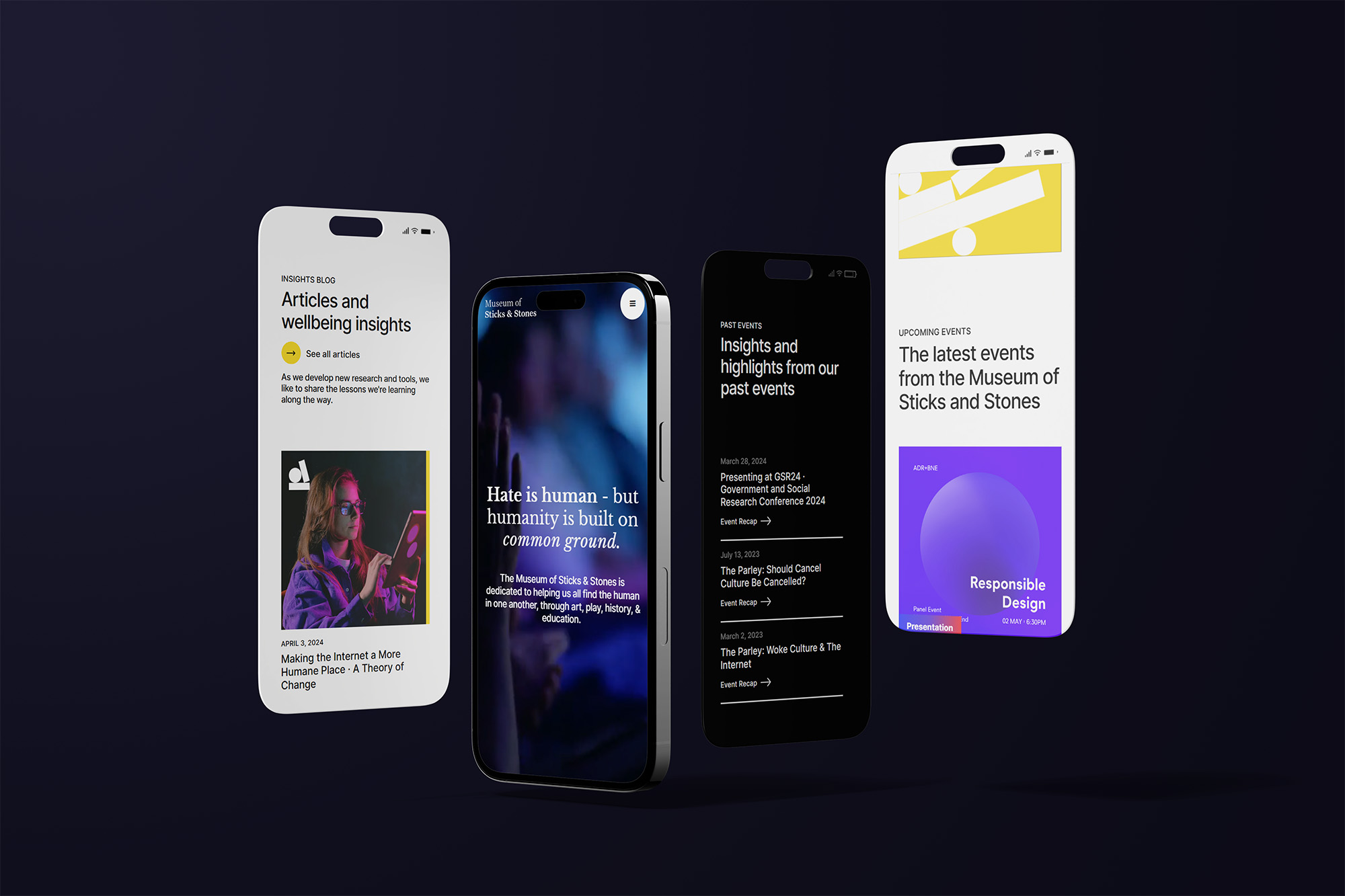
The project retained the foundations of the existing identity but expanded them into a richer digital language, a clearer structure and a more engaging experience, including an interactive exhibition that gave visitors a different way to encounter stories of online hate and harm.
Our mission is to foster common ground for all, and equip everyday people to see the human in one another.
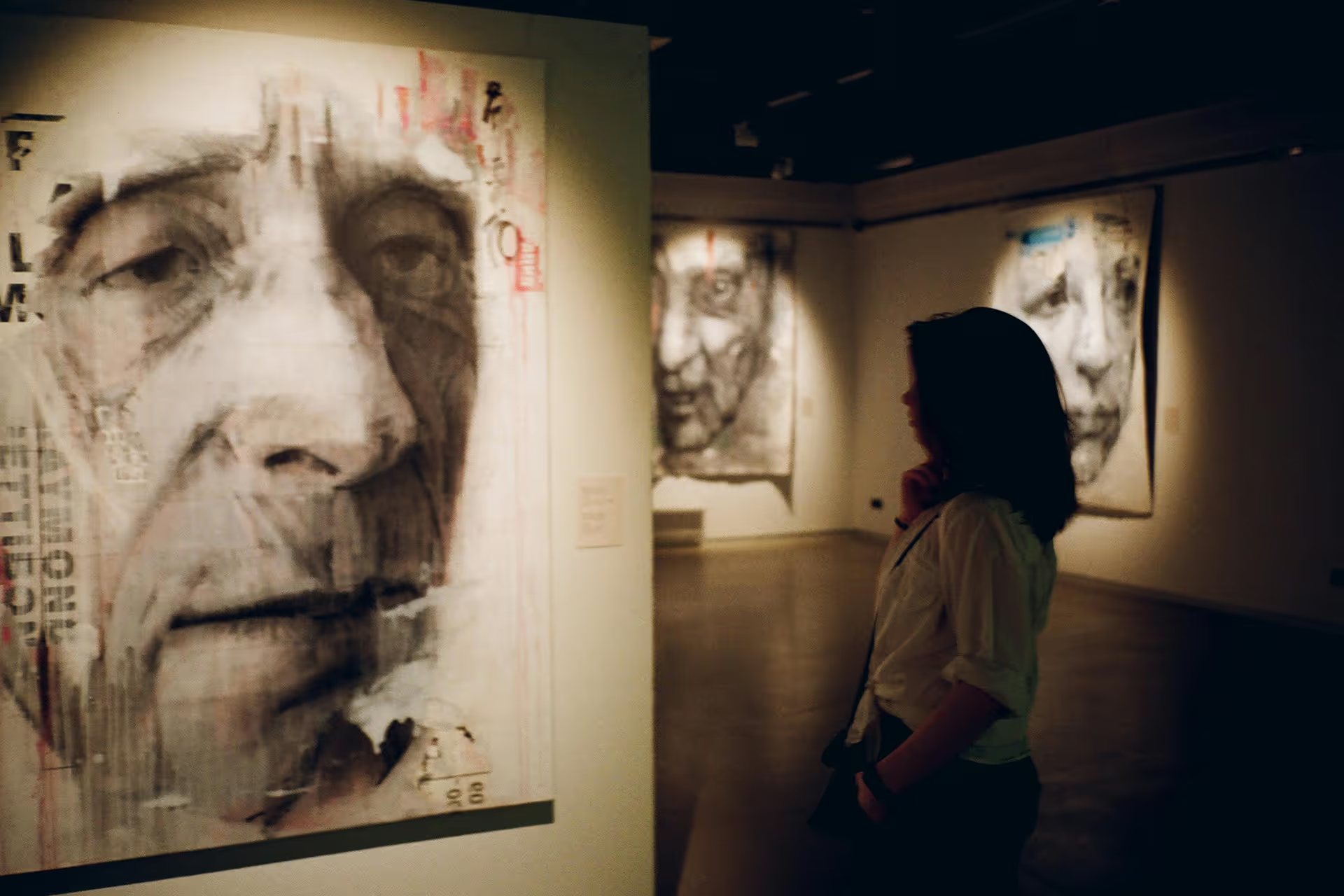
While MoSS doesn't yet have a physical museum space, we wanted to emulate one in digital form with an experience that would be powerful, resonant and relatable. We built the MoSS Story Project. It features real accounts of online bullying and harm, the kind that happens when people hide behind screens. To tell that story visually, we designed a silhouetted image reveal: faces only become visible as you engage with the content. It's a small detail, but it captures something important about how anonymity online makes it easier to dehumanise others.
Since we first developed language, humanity has shared stories. The MoSS Story Project captures and shares the stories of people from around the world, covering hate, love and what it means to be human.
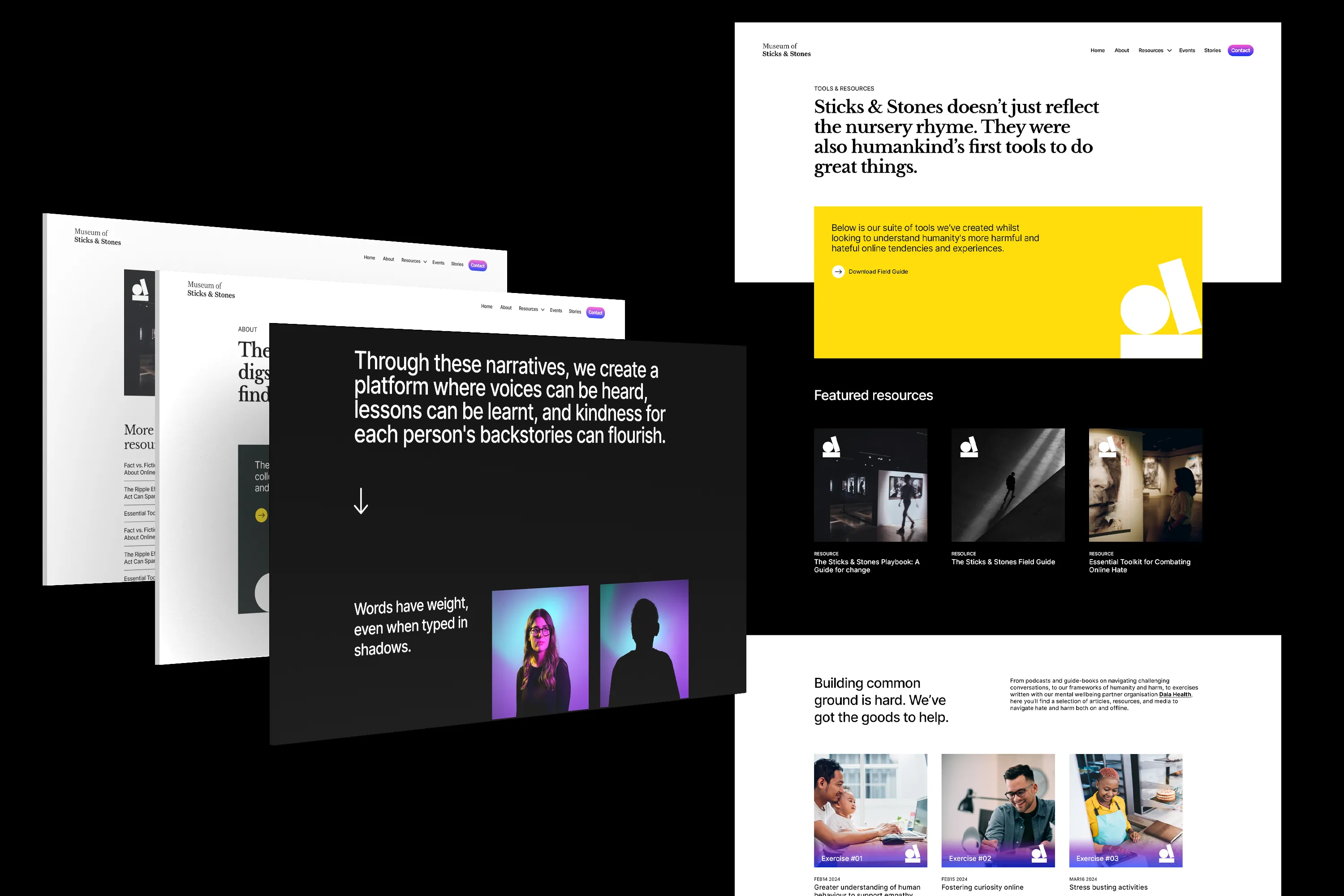
The result was a more dependable and flexible digital home for the organisation, one capable of bringing its work together and continuing to accommodate new stories, events, resources and initiatives.
The expanded visual language gave the Museum a more confident public presence without discarding the identity people already recognised. The new structure made its different activities easier to understand, while the Story Project demonstrated how the website itself could become part of the Museum's work. Rather than representing a museum that existed elsewhere, the website became one of the places where the Museum could be experienced.
You can visit the MoSS Story Project here, or explore the full website for the complete digital museum experience here.
Services
Web Design and Development, UI/UX Design, Interactive Experience, Brand Story, Brand Messaging, Brand Voice
Industry
Not-for-profit, Social change, Mental health
Year
2025
Website
Visit siteIn their words
“I honestly couldn't recommend working with Adam enough. His team's work is incredibly creative, and their attention to detail is awesome.”


